
WELCOME BONUS 300%
UP TO €2000 + 100
FREE SPINS
UP TO €2000 + 100
FREE SPINS
Home → Games
Casino games at Mega-Paris
9/6 table: nine for Full House, six for Flush
The Jacks or Better video poker game offers a 9/6 paytable, indicating nine units for a Full House and six units for a Flush. This specific paytable results in a Return to Player (RTP) of 97.29%. The house edge for this game stands at 2.71%.
This 9/6 configuration is a reduction from potentially higher-paying tables, as a 9/6 table costs approximately 2.25 percentage points of RTP compared to a 9/5 table. Other intermediate paytables exist, such as 8/6 at 98.39% RTP or 7/5 at 96.15% RTP.
For players, this means that for every 100 units wagered over the long run, an average of 97.29 units is returned. The house retains the remaining 2.71 units on average, making it a standard offering in video poker.
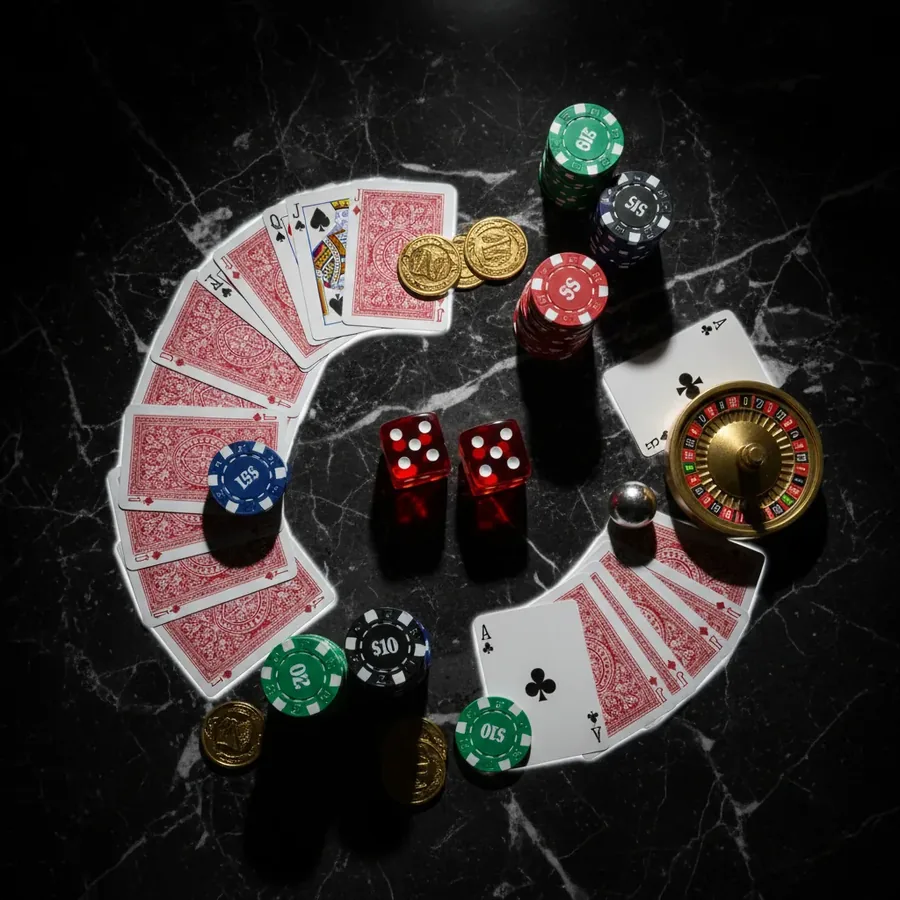
La Partage applies only to even money bets
French Roulette with the La Partage rule offers a superior RTP of 98.65% on even money bets. This rule applies when the ball lands on zero, refunding half of the stake on bets like Red/Black, Odd/Even, or Low/High. The house edge is consequently reduced to 1.35% for these specific wagers.
Without La Partage, the house edge on French Roulette's even money bets remains at the standard European level of 2.70%, mirroring the RTP of 97.30%. It is crucial to note that La Partage does not extend to inside bets such as straight or split wagers.
This significant reduction in the house edge for even money bets makes French Roulette with La Partage a more favorable option for players. For instance, a 1.35% house edge means that for every 100 units bet, approximately 98.65 units are expected to be returned over time.
37 vs. 38 Sectors: What the Double Zero Costs
European Roulette features 37 sectors on its wheel, comprising numbers 1 through 36 plus a single zero. This configuration results in an RTP of 97.30% and a house edge of 2.70%. All bets on this wheel share this consistent edge, regardless of their payout.
American Roulette, in contrast, includes an additional '00' sector, bringing the total to 38 sectors. Despite the same payout ratios as European Roulette, this extra zero significantly increases the house edge to 5.26%. This translates to a lower RTP of 94.74%.
The presence of the double zero in American Roulette effectively doubles the casino's advantage on every bet placed. Over extended play, this difference means players can expect to lose nearly twice as much compared to playing European Roulette.
Straight, Split, and Corner: Three Terms Briefly Explained
In Roulette, a 'Straight' bet is a wager on a single number, typically paying 35 to 1. A 'Split' bet covers two adjacent numbers and pays 17 to 1. These are common inside bets offering higher potential payouts but lower hit frequencies.
A 'Corner' bet, also known as a square bet, covers four numbers that meet at a corner on the betting layout. This bet pays 8 to 1. Understanding these basic bet types is fundamental to navigating the Roulette table and its betting options.
These inside bet payouts are consistent across both European and American Roulette wheels, though the overall house edge differs due to the number of zero pockets. For instance, a straight bet on European Roulette has a 2.70% house edge, while on American Roulette it rises to 5.26%.
Connection Lost in Table Game: Round Continues Automatically
In the event of a lost internet connection during a table game, the round typically continues automatically. This ensures that players do not miss their turn or have their bets voided due to technical disruptions. The system processes the game state based on the last valid input.
This automatic continuation is a safeguard designed to maintain game integrity and fairness for all participants. For example, in a Blackjack game, if a connection is lost after a player's bet is placed, the hand will be played out according to standard rules, and the outcome recorded.
Players should be aware that while the game continues automatically, it is their responsibility to manage their bankroll and understand the potential outcomes. Bets placed before a disconnection are still valid and will be settled according to the game's results.
Game categories at a glance
| Category | Examples | Stakes From | Highlight |
|---|---|---|---|
| Slots | Book of Demi Gods 2, Sun of Fortune, Extra Chilli Megaways | 0,10 EUR | thousands of titles |
| Table games | Roulette, Blackjack, Baccarat | 0,50 EUR | classic rules |
| Live casino | Casino Hold'em, Dream Catcher | 0,20 EUR | real dealers |
| Jackpot games | Mega Moolah, Divine Fortune, Age of the Gods | 0,20 EUR | progressive pools |
| Instant games | Aviator, Plinko, Mines | 0,10 EUR | fast rounds |
| Video poker | Jacks or Better, Deuces Wild | 0,25 EUR | strategy based |
Minimum deposit 20 EUR, table games count 10 percent
A minimum deposit of 20 EUR is required to participate in promotions. This deposit threshold ensures eligibility for bonuses and offers. Players should note that table games contribute only 10 percent towards wagering requirements. This means that for every 10 EUR wagered on table games, only 1 EUR counts towards clearing bonus funds. This contrasts with slots, which typically contribute 100 percent.
Understanding this contribution rate is crucial for players who prefer table games. A 300% welcome bonus up to €2,000, for instance, would require significantly more play on table games to meet its wagering demands. For example, a 10 EUR bonus on table games would need 100 EUR in wagers (10 EUR x 10% = 1 EUR counted) to fulfil a 1x wagering requirement, compared to just 10 EUR on slots.
This weighting system directly impacts how quickly bonus funds can be converted into withdrawable cash. Players aiming to maximize bonus benefits should be aware of this distinction. A player aiming to clear a bonus by playing Blackjack, where the house edge can be as low as 1.85%, will find the process extended due to the 10% contribution.
Player pays 1:1 without any commission
In certain Baccarat variations, the Player bet offers a 1:1 payout without any commission. This offers a straightforward win for the Player hand, meaning a 10 EUR bet returns 20 EUR. This differs from the Banker bet, which typically includes a 5% commission on winnings. The Player bet has an RTP of 98.94%, making it a favourable option.
While the Banker bet in Baccarat has a slightly higher RTP of 98.94% and a lower house edge of 1.06%, the absence of commission on the Player bet simplifies payouts. A 1:1 payout means a 10 EUR winning bet yields exactly 10 EUR profit. This constant edge on all bets ensures a predictable casino advantage.
The Baccarat Banker bet, despite the 5% commission, is generally considered the best bet due to its superior RTP. However, the Player bet's 1:1 payout without deductions offers clarity for players. The Tie bet, with a payout of 9:1, has a significantly higher house edge of 4.84% and is less advisable.
When is Splitting Aces and Eights Sensible?
Splitting Aces and Eights in Blackjack is a strategic decision influenced by specific game rules and the player's hand. While splitting Eights is generally recommended to break up a poor starting hand, splitting Aces is often less advantageous. The decision hinges on maximizing potential winnings and minimizing losses.
Splitting Eights is sensible because an 8 and 8 total 16, a difficult hand to play. Splitting them creates two hands starting with an 8, which is much more playable. In contrast, splitting Aces means each hand starts with an Ace, typically receiving only one additional card. This limits the potential for improvement.
The effect of rule variations, such as the payout for Blackjack being 6:5 instead of 3:2, can also influence the decision to split. This rule change increases the house edge by 1.39 percent points. While splitting Aces might seem appealing, the limited potential for improvement combined with other rule variations makes it a less consistently beneficial move than splitting Eights.
Jacks or Better: Check Payout Table Before Betting
In Jacks or Better video poker, the payout table is paramount and should be reviewed before placing any bets. Different payout structures significantly alter the game's Return to Player (RTP). For example, the 8/5 payout table, common in Jacks or Better, offers an RTP of 97.29%. This means the house edge is 2.71%.
Variations in payouts, such as the difference between a Full House paying 8 and a Flush paying 5 (8/5), versus a Full House paying 9 and a Flush paying 6 (9/6), have a substantial impact. The 8/5 table results in a 2.25 percent point reduction in RTP compared to the 9/6 version. This difference is crucial for long-term play.
Therefore, players should always verify the specific payout ratios displayed on the machine or game interface. A 9/6 Jacks or Better game offers a much higher RTP of 98.45%. Understanding these figures is key to making informed betting decisions and optimizing potential returns in video poker.
Pass Line in Craps: Process in Four Steps
The Pass Line bet in Craps is a fundamental wager with a straightforward process. The first step is making the bet before the come-out roll. If the come-out roll is a 7 or 11, the Pass Line bet wins. Conversely, if the roll is a 2, 3, or 12, the Pass Line bet loses, with 12 often resulting in a push.
If the come-out roll is any other number (4, 5, 6, 8, 9, or 10), that number becomes the 'Point'. The game then continues with subsequent rolls. The Pass Line bet wins if the Point is rolled again before a 7. The house edge on the Pass Line bet is 1.36%, with an RTP of 98.64%.
The fourth step involves 'Free Odds' bets, which can be placed once a Point is established. These Free Odds bets have a 0.00% house edge, meaning they pay out according to true odds. This is the only bet in Craps with no house advantage. The combined RTP for Pass Line with 3-4-5x odds is 99.63%.
100 EUR bet, 50 rounds: the expected value
A 100 EUR bet on a game with a 99.85% RTP, such as Blackjack Ein Deck, means an average expected return of 99.85 EUR per round. Over 50 rounds, the theoretical expected loss would be 50 rounds multiplied by 100 EUR, then multiplied by the house edge of 0.15%. This calculation results in an expected loss of 7.50 EUR.
The house edge for American Roulette, with its double zero, is 5.26%. Betting 100 EUR on this game would theoretically result in an average loss of 5.26 EUR per round. This contrasts significantly with games like Baccarat Banker, which has a house edge of only 1.06%.
For Video Poker Deuces Wild — Not So Ugly Ducks, the house edge is a mere 0.27%. A 100 EUR bet on this variant would expect an average loss of only 0.27 EUR per round. This significantly lower house edge means a 50-round session could see an expected loss of just 13.50 EUR.
Declining Insurance: The Most Common Blackjack Mistake
The 'Insurance' side bet in Blackjack is often taken when the dealer shows an Ace, offering a payout of 2:1 against the player's bet. However, the underlying RTP for this bet is significantly lower than the main game, often falling below 90% depending on the rules. This makes it a poor strategic choice for the player.
A better strategy involves understanding game rules and their impact on the house edge. For instance, Blackjack Surrender (Late Surrender) modifies the house edge by approximately -0.08 percent points. This rule allows players to forfeit half their bet after the dealer checks for blackjack, which is a more beneficial option than taking insurance.
The decision to take insurance is frequently driven by a misunderstanding of probabilities rather than sound mathematical play. The house edge on insurance can be as high as 14.36% in some scenarios, notably worse than even the Tie bet in Baccarat with an 8:1 payout which has a 14.36% house edge. Player decisions should prioritize the main game's RTP.
Four Blackjack Hand Decisions at a Glance
In Blackjack, a 'Hit' decision involves taking an additional card to improve a hand total, while 'Stand' means accepting the current hand. A 'Double' allows the player to double their initial bet and receive only one more card. These fundamental choices directly influence the game's RTP, with optimal strategy minimizing the house edge.
The 'Split' option is available when a player is dealt two cards of the same rank, allowing them to divide the hand into two separate hands, each with its own bet. Rules regarding splitting Aces, such as receiving only one card per split Ace, can significantly alter the RTP. Resplitting Aces, for example, can improve RTP by approximately 0.08 percent points.
Blackjack Surrender, a specific rule, allows players to concede their hand after the dealer checks for blackjack and forfeit half their stake. This rule is beneficial as it reduces the house edge by around 0.08 percent points. Early Surrender, though much rarer, offers even greater advantage, potentially reducing the edge by up to 0.6 percent points.
What Doesn't Count Towards Bonus Wagering on Table Games?
Players aiming to meet wagering requirements for a welcome bonus, such as the 300% up to €2,000 plus 100 free spins offer, should note that table games contribute differently. Typically, table games contribute only 10% towards the wagering requirements. This means a 10 EUR bet on a table game counts as only 1 EUR towards the turnover.
The distinction between game types is crucial for bonus utilization. While table games have a 10% contribution rate, Slots contribute 100% towards wagering. For example, a 10 EUR bet on Slots would count as 10 EUR towards the required turnover, making them a faster route to unlocking bonus funds.
Certain bets or game features may also be excluded from contributing to bonus wagering. Side bets, for instance, often do not count towards wagering requirements, regardless of the game they are placed on. Players should always review the specific bonus terms and conditions to understand these exclusions fully.
Split 17:1 and Corner 8:1 in Payout Comparison
In Roulette, a 'Split' bet covers two adjacent numbers and pays 17:1. This payout structure is standard for European and French Roulette. When compared to other roulette bets, its effectiveness depends on the player's risk tolerance and chosen betting strategy across the 37 sectors of the wheel.
A 'Corner' bet, also known as a Square bet, covers four numbers that meet at a corner on the betting layout. This bet pays 8:1. Like the Split bet, its payout is fixed and contributes to the overall house edge of the roulette variant being played.
The house edge on American Roulette, which features both a 0 and 00 sector (38 sectors total), is 5.26%. This means that on average, for every 100 EUR wagered, 5.26 EUR is retained by the casino, regardless of whether the bets are Split at 17:1 or Corner at 8:1.
Contact
Live - online chat
Banking









Providers











Megapari 2026